Showing posts with label Los Angeles Harbor. Show all posts

Saturday, May 6, 2023

Fort MacArthur K-9 Command -- First Dog Arrives at Fort Mac!

It's been a long time since I've posted on this blog, so it's overdue for an update! I've completed more  research on the World War II era Fort MacArthur K-9 Command. Someday I'd like to write the history of this interesting facet of Los Angeles Harbor history, but in the meantime I'll post some historical tidbits.  

The original Fort MacArthur K-9 Command was organized in December 1940 "for the purpose of conserving manpower and strengthening the guard by replacing men with dogs." This was according to Colonel Francois H.K. Reynolds of the Veterinary Corps Chief, Veterinary Section of Service Command Surgeon as written in the History of the Veterinary Activities of the Ninth Service Command (World War II).

The original Canine Command at Fort MacArthur consisted of six dogs obtained through donations by civilians. The number would increase to thirty in January 1942. 

The first dog offered to the fort was a two-year old German shepherd named Lady from nearby Wilmington. Here is an article from the San Pedro News Pilot from February 7, 1941 that describes this:


Wednesday, March 31, 2010

Harbor Area Reacts to Civil War's End and President Lincoln's Assassination

Although Los Angeles had been known as a "hot bed of secession," the harbor area was jubilant at the end of the Civil War and the prospect of peace. In April 1865, a correspondent from the San Francisco Bulletin reported that "On the receipt by telegraph of the occupation of Richmond, 100 guns were fired in Wilmington, and crowds of the right kind of people perambulated the streets with torches, while the town was as bright as day with bonfires."

Wilmington is near San Pedro and is part of the Los Angeles Harbor area.

As seen throughout the country, however, this jubilation quickly turned to grief after President Abraham Lincoln was shot and died shortly thereafter on April 15, 1865.  When the telegraph of Lincoln's assassination reached Wilmington, businesses and public houses were closed and hung with crape by grief-stricken residents. 

General Phineas Banning, a successful businessman known as the "father of Wilmington," ordered his employees to suspend work on the day of Lincoln's funeral. The "heavy blows usually resounding in Banning's huge blacksmithing establishment" were temporarily silenced, and other locals followed this example and suspended work.

The Bulletin's correspondent noted that on the sacred day of Lincoln's funeral "not even a team or pleasure wagon was to be seen leaving the little town" and "it was a strange sight to see billiard tables and card-tables utterly deserted among so fun-loving a population as Wilmington contains."

While General Banning and the whole of Wilmington's population was described as having "shown themselves the true stuff," the local establishment of Tomlinson & Co. was criticized for being "utterly indifferent to the great national calamity that had just taken place" by continuing work with all their men until dark after news of Lincoln's funeral arrived -- unlike A.W. Timms who instantly closed his store and trimmed his whole establishment with black.

Saturday, March 13, 2010

Deadman's Island: British Whaling Captain Hanged by Mutineers


Deadman’s Island was a San Pedro landmark, a rocky isle about 800-feet long, 250-feet wide, and over 60-feet high that guarded the entrance to Los Angeles Harbor. It was removed in the late 1920s to make room for large ships in the growing harbor.

The following story is from the Evening News, June 1901:
---

Hanged by Mutineers
Pieces of Rope Found Clinging to Captain's Crumbling Skeleton

San Pedro, Cal, June 7 -- Through the caving down of a bank and the discovery of a mass of crumbling human bones a clew has been bound [sic] to a mystery that has existed for over a century.

A hundred years ago the captain of a British whaling ship, lying off this port, was killed by his crew, which mutinied.

It was known that they buried him on Deadman's Island, but the manner in which they accomplished the killing was kept a secret and, although in later years the subject was one of much inquiry, the direct cause of death was never determined.

Gradually the sea has washed away the base of Deadman's Island, which stands near the entrance to the inner harbor, and the upper part has kept caving away.

A party of boys fishing near the place Wednesday discovered the contents of the grave, which had fallen by the caving away of the bank.

The bones had fallen only a short distance from their resting place, so that the arrangement was only partly destroyed.

Although solid, as if preserved by the dryness of the sandy soil, the bones were greatly yellowed, showing
that they had been resting there probably a hundred years.

Looking more closely the boys found an old rope, rotted with age, wound about the skeleton, between the head and ribs.

The rope was of the size used by hangmen.

The discovery is taken to indicate that the unfortunate skipper was hanged by his crew, and that they buried him without removing the rope, with which he had been hanged.

Saturday, February 13, 2010

California Fish Company and the Alpha

I have completed quite a bit of research on the California Fish Company and its fishing vessel named the Alpha. Here is a preview:

The California Fish Company opened in 1893 and was the first cannery in Los Angeles Harbor, the first successful Pacific Coast sardine cannery, and the world's pioneer albacore tuna cannery.

The Alpha, California’s first purse seine boat, was built in 1893 in Alameda, California. The sloop had a 60-foot mast and carried a large main sail, a “jib” (small triangular sail forward of the mast) and a “flying jib” (outermost jib). She was also most likely the first gasoline-powered fishing boat in Los Angeles Harbor.

The Alpha had a crew of about seven that consisted of a captain, engineer, cook and four fishermen, all of whom fished and helped keep the boat and gear in good working order. Members of the crew were paid wages, as well as a certain percentage of the value of their catch.  The crew spotted schools of sardines at the surface in nearby waters. The easiest way to spot a school of sardines was by spotting their fluorescent glow on a dark night.

Saturday, January 23, 2010

USS LOS ANGELES Decommissioning Ceremony


From the Navy:

The Decommissioning Ceremony of the USS Los Angeles (SSN 688) submarine occurred on Janury 23, 2010 at the Port of Los Angeles, San Pedro, California.

The USS Los Angeles was the fourth naval ship to be named after the City of Los Angeles, and was the lead ship of her class. She was launched on April 6, 1974 at Newport News Shipbuilding and Drydock company in Newport News, Virginia.

On May 27, 1977, she hosted President Jimmy Carter and Admiral Hyman Rickover for an at-sea demonstration of the capabilities of the nation's newest fast attack submarine.

The USS Los Angeles commenced the first Engineered Refueling Overhaul of a Los Angeles class fast attack submarine in the early 1990s.  During this overhaul, she was outfitted with the latest state-of-the-art sonar and fire control systems, as well as the Navy's newest reactor controls equipment. These extensive upgrades made her one of the most advanced submarines in the world at the time.

Her many capabilities include wartime functions of undersea warfare, surface warfare, strike warfare, mining operations, special forces delivery, reconnaissance, carrier battle group support and escort and intelligence collection.


Excerpts from the Daily Breeze newspaper article (1/23/10):

The USS Los Angeles was commissioned in 1976 to spy on enemy Soviet ships during the Cold War, spawning 44 similar models that will eventually be replaced over the next several years by the larger, more technologically advanced Virginia class of submarines.

"The Los Angeles-class subs were designed for a 30-year lifespan and so, unfortunately, it's time to start taking them apart," said Lt. Cmdr. David Benham, a Navy spokesman.

Commander Steven M. Harrison was the last Commanding Officer of the USS Los Angeles (SSN 688).

**San Pedro played an early role in the development of the Navy's submarine force. For part of this history, please see this prior post:


Monday, January 18, 2010

Early History of the San Pedro Fishermen's Fiesta


In the decades after World War II, the San Pedro Fishermen's Fiesta was a colorful extravaganza that paid tribute to the Port of Los Angeles-based fishing industry, the largest in the nation for a good part of the twentieth century.

During its heyday in the 1950s and 1960s the Fiesta attracted hundreds of thousands of spectators and was acclaimed as the third most photographed special event in the nation (behind the Tournament of Roses and the Mardi Gras). Well-known celebrities and politicians such as Ronald Reagan, Pat Brown and Richard Nixon attended.

The origin of the San Pedro Fishermen's Fiesta dates to the years preceeding the Second World War. Near the end of summer, San Pedro fishermen would take their families to nearby Catalina Island  for a "big picnic" before the start of school. Frank Canetti, a former Fiesta director, said in an interview in 1982 that as a young boy he remembered a fleet of 50 to 60 decorated boats being blessed and then sailing with crew and families for a weekend at the Island.

Although it wasn't called the "Fishermen's Fiesta," on March 26, 1938 about 100 decorated, flag-bedecked purse seiners (fishing vessels) paraded through Los Angeles Harbor. This was a celebration by the Fishermen's Co-operative Association to dedicate its new terminals and clubhouse at the Southern Pacific slip.

On Sunday, October 21, 1945 what can be called the first "formal" Fishermen's Fiesta took place in the harbor. Thousands of dockside spectators watched more than 100 brightly decorated fishing boats sail a 20-mile course past anchored warships and Cabrillo Beach, into the main channel at Wilmington, and around Rainbow Pier at Long Beach.

Occurring shortly after the end of World War II, this salute to the local fishing fleet was billed as a Victory Parade. The winner of first prize was the boat City of Naples II that carried a living replica of the famous Flag raising on Iwo Jima.  Fishing industry spokesmen proclaimed that the fishing industry at the Port of Los Angeles was an important wartime supplier of food, supplying more than 12,000,000 gallons of sardine oil to strategic war industries for example.

On October 6, 1946, the Second Annual Fishermen's Fiesta was held from 10:00 A.M. to midnight at the "World's No. 1 Fishing Port." There were no Fiestas in Los Angeles Harbor the following two years, but the nautical parade returned with a vengeance in 1949 (with four days of festivities from September 8-11).

The 1949 Fiesta featured a coronation of a “King Fisherman” and dedication of a newly built $1,500,000 fishermen’s dock christened by Los Angeles Mayor Fletcher Bowron with a splash of waters brought from the Seven Seas.

*Above image shows a photo of the fishing vessel San Antonio participating in the 1949 Fiesta.
**Stay tuned for further history of the San Pedro Fishermen's Fiesta.

Sunday, November 22, 2009

Japanese Warships Visit Los Angeles Harbor


Japanese crusier Asama

In early June 1914, the Japanese cruisers Asama and Azuma visited Los Angeles Harbor. They were welcomed by representatives of the Mayor's office of Los Angeles, the Chamber of Commerce of Los Angeles, and several thousand Japanese Americans.

Both of these ships were veterans of the Russo-Japanese War, and the Asama earlier had participated in the support of Japanese forces in the Boxer Rebellion in China.

Wednesday, November 4, 2009

Silent Film Legend Mary Pickford Visits Los Angeles Harbor


"America's Sweetheart" Mary Pickford visited Los Angeles Harbor on August 12, 1919. Pickford and other dignitaries went aboard the battleship Texas anchored in the outer harbor to honor the crew which had raised $130,000 for the second Liberty Bond campaign, the most of any ship in the U.S. Navy. Pickford presented the men with a silver cup as a reward. The pennant of the George Washington, the ship that had transported President Woodrow Wilson to the Peace Conference in France, was also given to the Texas crew as a personal gift from the President.
While reading her formal remarks, Pickford received the greatest ovation when she quipped that she would prefer to make "a real speech" if she "didn't have to be so formal with the Secretary of Navy" (Josephus Daniels) present. Shortly after this visit, Pickford helped establish the United Artists film studio.

Saturday, October 3, 2009

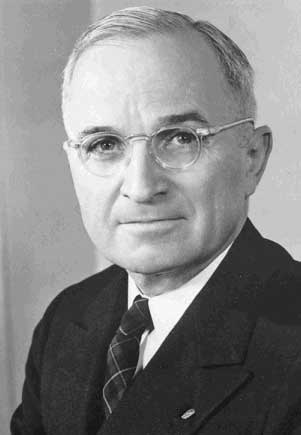
Harry S. Truman Visits Los Angeles Harbor


Former President Harry S. Truman, having left office just two months earlier, visited Los Angeles Harbor on March 23, 1953 and left a couple of days later. He and his family arrived in Wilmington aboard the SS President Cleveland, on their way to Hawaii. Truman was in a jovial mood and remarked that this was his first vacation in 30 years. While in the harbor, he greeted Los Angeles Mayor Fletcher Bowron and members of the Harbor Commission.
The highlight of Truman’s brief stay at the port was the luncheon he had aboard the ship with twelve of his Army buddies, all of whom fought together during World War I in France. Truman played the piano for his fellow artillerymen. Several thousand people saw the Truman’s off from the harbor, while a band played the “Missouri Waltz.”

Thursday, February 15, 2007

Just Another Day in Los Angeles Harbor

Recent image of the Main Channel of Los Angeles Harbor (aka, Port of Los Angeles), the busiest port complex in the United States.