Showing posts with label Port of Los Angeles. Show all posts
Saturday, March 13, 2010
Deadman's Island: British Whaling Captain Hanged by Mutineers
Deadman’s Island was a San Pedro landmark, a rocky isle about 800-feet long, 250-feet wide, and over 60-feet high that guarded the entrance to Los Angeles Harbor. It was removed in the late 1920s to make room for large ships in the growing harbor.
The following story is from the Evening News, June 1901:
---
Hanged by Mutineers
Pieces of Rope Found Clinging to Captain's Crumbling Skeleton
San Pedro, Cal, June 7 -- Through the caving down of a bank and the discovery of a mass of crumbling human bones a clew has been bound [sic] to a mystery that has existed for over a century.
A hundred years ago the captain of a British whaling ship, lying off this port, was killed by his crew, which mutinied.
It was known that they buried him on Deadman's Island, but the manner in which they accomplished the killing was kept a secret and, although in later years the subject was one of much inquiry, the direct cause of death was never determined.
Gradually the sea has washed away the base of Deadman's Island, which stands near the entrance to the inner harbor, and the upper part has kept caving away.
A party of boys fishing near the place Wednesday discovered the contents of the grave, which had fallen by the caving away of the bank.
The bones had fallen only a short distance from their resting place, so that the arrangement was only partly destroyed.
Although solid, as if preserved by the dryness of the sandy soil, the bones were greatly yellowed, showing
that they had been resting there probably a hundred years.
Looking more closely the boys found an old rope, rotted with age, wound about the skeleton, between the head and ribs.
The rope was of the size used by hangmen.
The discovery is taken to indicate that the unfortunate skipper was hanged by his crew, and that they buried him without removing the rope, with which he had been hanged.
Sunday, March 7, 2010
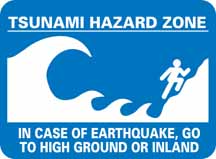
"Largest Earthquake in the World" Impacts Los Angeles Waterfront, May 1960
The recent deadly 8.8 magnitude earthquake in Chile caused a tsunami advisory for California's coastline, but fortunately no significant local damage.
It's worth a look back at another Chilean earthquake that generated tsunami wave surges that did cause some damage to California's coastline and the Los Angeles and Long Beach Harbor areas.
On May 22, 1960, a magnitude 9.5 earthquake struck south central Chile. The United States Geological Survey calls this "the largest earthquake in the world." In Chile, approximately 2,000 people were killed, 3000 injured, and another 2,000,000 were left homeless.
The Governor's Office of Emergency Services for California estimates that the waves generated by this massive earthquake caused about $500,000 to $1,000,000 worth of damage to the state, and notes that two people were killed.
Locally, the Los Angeles Times reported that boats and piers were smashed along San Pedro's waterfront, where a series of tidal currents surged back and forth surged through the port's narrow Cerritos Channel. Some 300 yachts and small boats were ripped from their slips, and early estimates were that 15-20 boats had sunk. The surge was estimated at up to 8-9 feet high in places at times. A strong current caused the port's Terminal Island ferry Islander to be swept off course by 300 yards, while "monumental traffic jams" occurred in both the Los Angeles and Long Beach harbor areas.
A Port of Los Angeles report states that the "Chilean earthquake and tsunami of May 1960 was the maximum event recorded in recent history to impact the Ports."
For more on this devastating earthquake, click on this link:
http://earthquake.usgs.gov/earthquakes/world/events/1960_05_22_articles.php
*Stay tuned for future blog entries on other tsunamis that impacted the Port of Los Angeles.
Saturday, January 23, 2010
USS LOS ANGELES Decommissioning Ceremony
From the Navy:
The Decommissioning Ceremony of the USS Los Angeles (SSN 688) submarine occurred on Janury 23, 2010 at the Port of Los Angeles, San Pedro, California.
The USS Los Angeles was the fourth naval ship to be named after the City of Los Angeles, and was the lead ship of her class. She was launched on April 6, 1974 at Newport News Shipbuilding and Drydock company in Newport News, Virginia.
On May 27, 1977, she hosted President Jimmy Carter and Admiral Hyman Rickover for an at-sea demonstration of the capabilities of the nation's newest fast attack submarine.
The USS Los Angeles commenced the first Engineered Refueling Overhaul of a Los Angeles class fast attack submarine in the early 1990s. During this overhaul, she was outfitted with the latest state-of-the-art sonar and fire control systems, as well as the Navy's newest reactor controls equipment. These extensive upgrades made her one of the most advanced submarines in the world at the time.
Her many capabilities include wartime functions of undersea warfare, surface warfare, strike warfare, mining operations, special forces delivery, reconnaissance, carrier battle group support and escort and intelligence collection.
Excerpts from the Daily Breeze newspaper article (1/23/10):
The USS Los Angeles was commissioned in 1976 to spy on enemy Soviet ships during the Cold War, spawning 44 similar models that will eventually be replaced over the next several years by the larger, more technologically advanced Virginia class of submarines.
"The Los Angeles-class subs were designed for a 30-year lifespan and so, unfortunately, it's time to start taking them apart," said Lt. Cmdr. David Benham, a Navy spokesman.
Commander Steven M. Harrison was the last Commanding Officer of the USS Los Angeles (SSN 688).
**San Pedro played an early role in the development of the Navy's submarine force. For part of this history, please see this prior post:
Monday, January 18, 2010
Early History of the San Pedro Fishermen's Fiesta
In the decades after World War II, the San Pedro Fishermen's Fiesta was a colorful extravaganza that paid tribute to the Port of Los Angeles-based fishing industry, the largest in the nation for a good part of the twentieth century.
During its heyday in the 1950s and 1960s the Fiesta attracted hundreds of thousands of spectators and was acclaimed as the third most photographed special event in the nation (behind the Tournament of Roses and the Mardi Gras). Well-known celebrities and politicians such as Ronald Reagan, Pat Brown and Richard Nixon attended.
The origin of the San Pedro Fishermen's Fiesta dates to the years preceeding the Second World War. Near the end of summer, San Pedro fishermen would take their families to nearby Catalina Island for a "big picnic" before the start of school. Frank Canetti, a former Fiesta director, said in an interview in 1982 that as a young boy he remembered a fleet of 50 to 60 decorated boats being blessed and then sailing with crew and families for a weekend at the Island.
Although it wasn't called the "Fishermen's Fiesta," on March 26, 1938 about 100 decorated, flag-bedecked purse seiners (fishing vessels) paraded through Los Angeles Harbor. This was a celebration by the Fishermen's Co-operative Association to dedicate its new terminals and clubhouse at the Southern Pacific slip.
On Sunday, October 21, 1945 what can be called the first "formal" Fishermen's Fiesta took place in the harbor. Thousands of dockside spectators watched more than 100 brightly decorated fishing boats sail a 20-mile course past anchored warships and Cabrillo Beach, into the main channel at Wilmington, and around Rainbow Pier at Long Beach.
Occurring shortly after the end of World War II, this salute to the local fishing fleet was billed as a Victory Parade. The winner of first prize was the boat City of Naples II that carried a living replica of the famous Flag raising on Iwo Jima. Fishing industry spokesmen proclaimed that the fishing industry at the Port of Los Angeles was an important wartime supplier of food, supplying more than 12,000,000 gallons of sardine oil to strategic war industries for example.
On October 6, 1946, the Second Annual Fishermen's Fiesta was held from 10:00 A.M. to midnight at the "World's No. 1 Fishing Port." There were no Fiestas in Los Angeles Harbor the following two years, but the nautical parade returned with a vengeance in 1949 (with four days of festivities from September 8-11).
The 1949 Fiesta featured a coronation of a “King Fisherman” and dedication of a newly built $1,500,000 fishermen’s dock christened by Los Angeles Mayor Fletcher Bowron with a splash of waters brought from the Seven Seas.
*Above image shows a photo of the fishing vessel San Antonio participating in the 1949 Fiesta.
**Stay tuned for further history of the San Pedro Fishermen's Fiesta.
Wednesday, October 7, 2009
Early History of the Port of Los Angeles

Here is a map (above) and an excerpt from the Report of the Board of Engineer Officers on Deep Water Harbor at San Pedro or Santa Monica Bays, California (as reprinted in the L.A. Times on Jan. 14, 1893):
"The record of vessels wrecked at San Pedro shows, with one exception, that the disasters occurred during the southerly storms, the heavy sea coming to the eastward of Catalina Island. The vessels were driven ashore on the west line of the bay. Among those lost were the Nicholas Biddle, Callao, Adelaide Cooper, San Luis American, R.P. Buck, and the Kennebeck. The exception noted was that of the Amy, which was driven ashore at Point Firmin during a northeast storm from the Santa Ana wind gap."
Labels:
history,
Port of Los Angeles,
San Pedro,
shipwrecks
Saturday, October 3, 2009
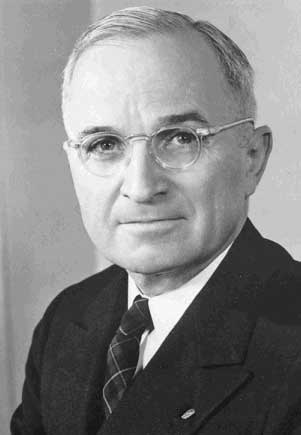
Harry S. Truman Visits Los Angeles Harbor
Former President Harry S. Truman, having left office just two months earlier, visited Los Angeles Harbor on March 23, 1953 and left a couple of days later. He and his family arrived in Wilmington aboard the SS President Cleveland, on their way to Hawaii. Truman was in a jovial mood and remarked that this was his first vacation in 30 years. While in the harbor, he greeted Los Angeles Mayor Fletcher Bowron and members of the Harbor Commission.
The highlight of Truman’s brief stay at the port was the luncheon he had aboard the ship with twelve of his Army buddies, all of whom fought together during World War I in France. Truman played the piano for his fellow artillerymen. Several thousand people saw the Truman’s off from the harbor, while a band played the “Missouri Waltz.”
Labels:
Los Angeles Harbor,
Port of Los Angeles,
Truman
Subscribe to:
Posts (Atom)